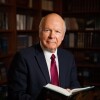

The expression “unconditional love” was made famous in the 20th century by a world-renowned psychologist, Carl Rogers, known as the father of “Client-Centered Psychotherapy.” The phrase caught on in the 1960s and eventually made its way into the world of religion, with repeated emphasis on “God’s unconditional love.” It is unfortunate that that expression has led to many people supposing that there are no conditions associated with experiencing the love of God or enjoying the blessings of God. God the Father loves all of His children, every one of them. He loves us when we keep His commandments, and He loves us when we do not keep His commandments. However, if we do not keep His commandments, we place ourselves in a position where we cannot feel and enjoy His love. Let’s look carefully at some scriptural passages.
In section 95 of the Doctrine and Covenants, the Lord commands the Latter-day Saints to build houses of worship, including a temple. “Verily I say unto you, it is my will that you should build a house. If you keep my commandments you shall have power to build it.” Now notice what follows: “If you keep not my commandments, the love of the Father shall not continue with you, therefore you shall walk in darkness” (Doctrine and Covenants 95:11–12; emphasis added). Let’s not misunderstand what’s being said here. It isn’t the case that, if we sin, God will cease to love us. Rather, if we choose not to keep His commandments, we place ourselves in a position where we cannot feel or enjoy or experience the love of God. We are unable to bask in the peace and the joy that come through faithfulness.
I’ll suggest an analogy here. If I stood outside my home on a clear, sunny July afternoon, I would see the bright sunlight, feel the heat, and eventually choose to go back into my air-conditioned home. What if a large, thick canvas bag covered me from head to toe while I stood in my front yard? I certainly would not be able to see the light of day, and, if my body were completely covered, I might not feel the heat, at least not for a while. I could cry out, “There is no sun today. I cannot see it! And there is no heat today, for I cannot feel it.” I would, however, be wrong. Just because my eyes and body were completely covered does not mean that the sun and its heat do not exist. Rather, I would have placed myself in a situation, in a condition, where I could not experience either one.
It is just so when we commit sin and do not repent. If we remain in our sins, we’re not going to enjoy the peace and light and warmth of God’s Holy Spirit like we could. In the very next chapter, John the Beloved writes: “And hereby we do know that we know him, if we keep his commandments. He that saith, I know him, and keepeth not his commandments, is a liar, and the truth is not in him. But whoso keepeth his word, in him verily is the love of God perfect [seen, felt, and enjoyed]: hereby know we that we are in him” (1 John 2:3–5; emphasis added).
Some 10 verses later, John writes: “Love not the world, neither the things that are in the world. If any man love the world, the love of the Father is not in him” (1 John 2:15; emphasis added). Here it is again: if we love the world and its accompanying worldliness, we cannot feel the Spirit of the Lord and thus cannot feel the love of the Father and the Son. They haven’t stopped loving us, but we are not in a spiritual condition to feel and delight in that love. In other words, there are conditions that we need to meet in order to be in a position to receive and find joy in the love of God, to feel His approbation and acceptance. Here are a few additional scriptural passages about the love of the Father and the Son:
- “If a man love me, he will keep my words: and my Father will love him” (John 14:23).
- “If ye keep my commandments, ye shall abide [remain, continue, stay, stick] in my love” (John 15:10).
- “He that hath my commandments, and keepeth them, he it is that loveth me: and he that loveth me shall be loved of my Father, and I will love him, and will manifest myself to him” (John 14:21).
- The Lord “loveth those who will have him to be their God” (1 Nephi 17:40).
- “God is no respecter of persons: But in every nation he that feareth him, and worketh righteousness, is accepted with him” (Acts 10:34–35).
Many years ago, President Russell M. Nelson taught that, rather than speak of God’s “unconditional love” and perpetuate misunderstanding, we would be wise to speak of the love of the Father and the Son as infinite, perfect, and enduring. Our Heavenly Father and our blessed Savior will always love us, no matter what. We would be wise to so live that we can feel and taste and experience that love and the eternal joy toward which it points.
When we are doing our best to traverse the covenant path without wandering off into forbidden paths, God our Father will acknowledge and accept our best efforts. He will often send subtle packets of His love to lift, strengthen, and encourage us. Sister Kristin M. Yee of the General Relief Society Presidency taught: “Perhaps like me, you have pleaded for help to not be left alone during some of the most emotionally, physically, and spiritually demanding seasons of your life. These intense seasons of growth have left what I call ‘spiritual stretch marks’ on the soul. But I bear witness that He has carried me, and He will carry you. He has graven you upon the palms of His hands (see Isaiah 49:16; 1 Nephi 21:16). He has been there as you’ve sought ‘to be righteous in the dark.’ He has not forsaken me, nor will He forsake you. And I will love Him forever for it.”
Read more from Robert L. Millet in How Great Thou Art: Revealed Insights into God, Our Heavenly Father.

Gain a deeper understanding of God
More articles for you:
▶ How I stopped worshipping a false God
▶ ‘I wouldn’t go back’: Why this husband and wife are profoundly grateful for their unmet healing
▶ 9 games you’ll want to bring on your next family vacation